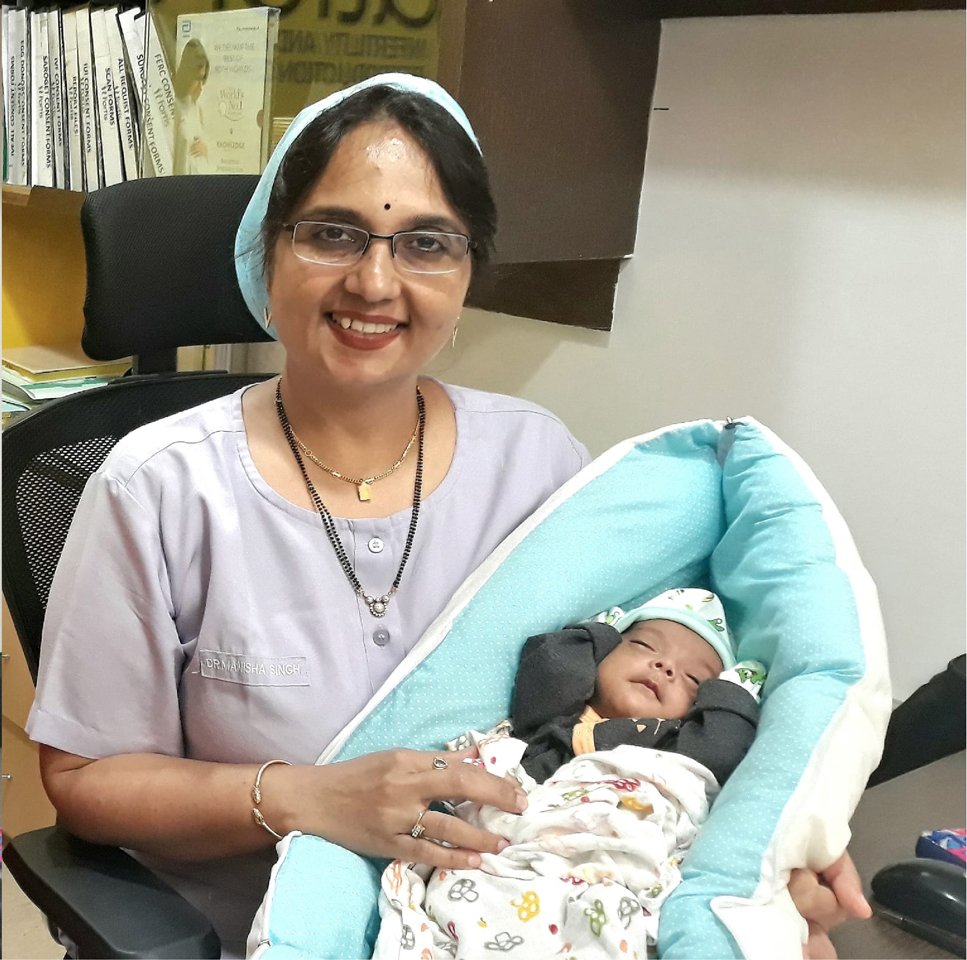
Dr. Manisha Rajpal Singh
Dr. Manisha Singh is an eminent Gynaecologist and a sub-specialist in Reproductive Medicine & Surgery with over 32 years of extensive surgical experience. She is also an acknowledged expert in Reproductive Medicine and Surgery services by Royal College of Obstetricians and Gynaecologists (RCOG), London, UK. Dr. Manisha Singh has an experience of over 32 years in Obstetrics, Gynaecology, Infertility & Assisted Conception treatments.
What Is Surrogacy?
Surrogacy is when a surrogate mother acts as the host for pregnancy and gives birth to a baby on behalf of the intended parents. She does not give her own egg; hence, she has no genetic link to the baby.
When Is Surrogacy Medically Recommended?
Absence or Abnormalities of the Uterus
Women born without a uterus, those with significant uterine abnormalities or those who have undergone hysterectomy may require surrogacy.
Medical Conditions That Make Pregnancy Unsafe
Certain serious cardiac, renal or systemic conditions may make pregnancy life-threatening.
Certain Cases of Recurrent Pregnancy Loss or Other Medical Issues
Some women face repeated loss of pregnancies even after being examined and receiving medical treatment.
What Types of Surrogacy Are Permitted in India?
Altruistic Surrogacy
Involves no commercial payment or financial incentive to the surrogate mother. Intended parents are responsible for permitted medical expenses and prescribed insurance coverage.
Gestational Surrogacy
The embryo produced by IVF technology is implanted into the womb of the surrogate mother, who does not provide her own egg and thus has no genetic link to the baby.
Who Is Eligible for Surrogacy Treatment in India?
- Legally married Indian citizens.
- Woman aged 23–50 years and man aged 26–55 years at certification.
- A recognised medical indication necessitating surrogacy.
- No surviving biological, adopted or surrogate child, subject to the statutory exception for certain children with serious medical conditions or disabilities.
Eligibility Criteria for Single Women
A widow or divorcee aged 35–45 years may qualify, subject to strict legal and medical requirements. According to the 2024 legal amendments, an eligible single woman must use her own eggs and donor sperm.
Eligibility Requirements for Surrogate Mothers
Must be a married woman aged 25–35 years, have at least one child of her own, be medically and psychologically fit, and provide informed consent with no previous surrogacy or egg donation.
How Does the Surrogacy Treatment Process Work?
The gestational surrogacy process is carried out in several stages:
Initial Fertility Consultation and Medical Evaluation
The fertility specialist reviews medical history, past pregnancies, test results, and any earlier treatment records.
Medical and Legal Eligibility Assessment
The intended parents complete the necessary assessments. The District Medical Board certifies the medical indication, after which the competent authority grants the eligibility and essentiality certificates required by law.
Surrogate Mother Screening and Evaluation
The prospective surrogate has physical, reproductive and psychological check-ups to confirm she is fit to carry a pregnancy.
IVF Treatment and Embryo Development
Egg retrieval and fertilisation take place in the laboratory by adding sperm. IVF or ICSI may be prescribed.
Embryo Transfer to the Surrogate Mother
One embryo is selected and implanted in the uterus of the surrogate mother.
Pregnancy Monitoring and Follow-Up
hCG testing is carried out to determine if the surrogate is pregnant. Additional monitoring involves monitoring the pregnancy and her well-being.
What Medical Tests Are Required Before Surrogacy?
- Blood tests
- Infectious disease screening
- Hormone profiles
- Ovarian reserve testing
- Semen analysis
- Uterine evaluation
The surrogate mother also goes through general health, reproductive and psychological assessments.
What Factors Affect Surrogacy Treatment Success?
- Egg and sperm quality
- How the embryo develops
- Uterine health
- Medical history
- The surrogate mother’s overall health
What Are the Medical Risks and Considerations of Surrogacy?
The risks during the IVF process can involve:
- Ovarian Hyperstimulation Syndrome
- Risk of bleeding or infection during egg retrieval
During Pregnancy:
- Gestational diabetes
- Hypertension
- Pre-eclampsia
- Miscarriage
- Preterm delivery
These complications are also common in normal pregnancies.
What Are the Legal Requirements for Surrogacy in India?
The Surrogacy (Regulation) Act of 2021 prohibits commercial surrogacy and permits only altruistic gestational surrogacy.
The provisions require medical certification, an eligibility certificate, consent, and insurance.
The 2024 amendment permits donor gametes in certain medically certified cases, provided at least one gamete is from the intending couple.
How Long Does the Surrogacy Process Take?
The time frame depends on test results, legal clearances, surrogate screening and the IVF cycle itself. From the first consultation to delivery, expect anything from several months to a little over a year.
What Is the Cost of Surrogacy Treatment in Bannerghatta Road, Bangalore?
The cost of surrogacy treatment in Bannerghatta Road, Bangalore varies with the IVF cycle, diagnostic tests, embryo freezing, medical care, pregnancy monitoring, delivery and the mandatory insurance cover. Once your medical evaluation is complete, we can give you an estimate based on your case. Paying the surrogate mother a fee is not allowed.
Why Consult Dr Manisha Rajpal Singh for Surrogacy and Fertility Evaluation?
- Expert Medical Evaluation: Thorough review of your medical history to establish a certified clinical indication for surrogacy.
- Legal & Ethical Clarity: Clear guidance on meeting the strict requirements of the Surrogacy (Regulation) Act, 2021.
- Personalised IVF Protocols: Tailored treatments including ovarian stimulation and embryo creation strategies to maximise success rates.
- Comprehensive Care: Over 32 years of clinical experience providing compassionate, end-to-end reproductive care from your first consultation through to delivery.
- A specialist experienced doctor to understand your medical concerns and guide you with personalised treatment plans
Book an Appointment
If surrogacy is something you are thinking about, book a consultation with Dr. Manisha Rajpal Singh to go over your medical history, your eligibility and the options open to you.
 If you Have Any Questions Schedule an Appointment OR Call Us On 080 - 66214281