What is Intracytoplasmic Sperm Injection (ICSI)?
The ICSI (Intracytoplasmic Sperm Injection) is performed in the laboratory during IVF treatment. In this type of sperm injection procedure, the embryologist uses sophisticated microscopic equipment to inject a single healthy sperm directly into an egg. In ICSI, a single sperm is injected directly into the egg, whereas in regular IVF, the sperm and egg are put together in a dish to allow fertilisation to take place. The ICSI IVF treatment, though, involves direct insertion of the selected sperm into the egg. This approach helps improve fertilisation in appropriately selected infertility cases. The technique was initially developed to treat severe male factor infertility, but is now used in certain situations where IVF fertilisation has not been successful, for surgically retrieved sperm or in any other specific situation found during a fertility assessment.Who May Benefit from IntraCytoplasmic Sperm Injection (ICSI)?
The determination of when ICSI treatment should be done depends on careful evaluation of both parties. It does not have to be applied for every IVF patient, but it provides several key benefits in certain cases of infertility.Severe Male Infertility
ICSI treatment may be prescribed to patients who suffer from various problems with sperm count, motility, or morphology. The procedure will allow getting around these issues, as a single healthy sperm will be directly injected into the egg.Low Sperm Count
If only a few sperm cells are available, ICSI can help select the most viable for fertilising the egg. This is particularly useful for patients with conditions such as severe oligospermia.Poor Sperm Motility
Impaired sperm motility means sperm cannot reach and fertilise the egg naturally. Since the sperm is directly injected into the egg, ICSI solves this problem and aids in fertilisation.Previous Fertilisation Failure During IVF
ICSI can help those couples who have not been able to fertilise eggs using IVF methods in their previous attempts. This technique helps increase the chances of fertilising the egg by injecting sperm without requiring it to penetrate the egg on its own.Surgically Retrieved Sperm
ICSI is generally prescribed when the sperm is retrieved through surgical retrieval procedures like TESA, PESA, and Micro-TESE. In such cases, fertilisation can be easily achieved by direct sperm injection, as the number of retrieved sperm may be limited.Unexplained Infertility or Advanced Fertility Treatment
For certain couples suffering from unexplained infertility or having some other specific clinical findings, advanced fertility treatment by way of ICSI may be recommended by fertility experts after thorough assessment. The choice is invariably tailored to each case.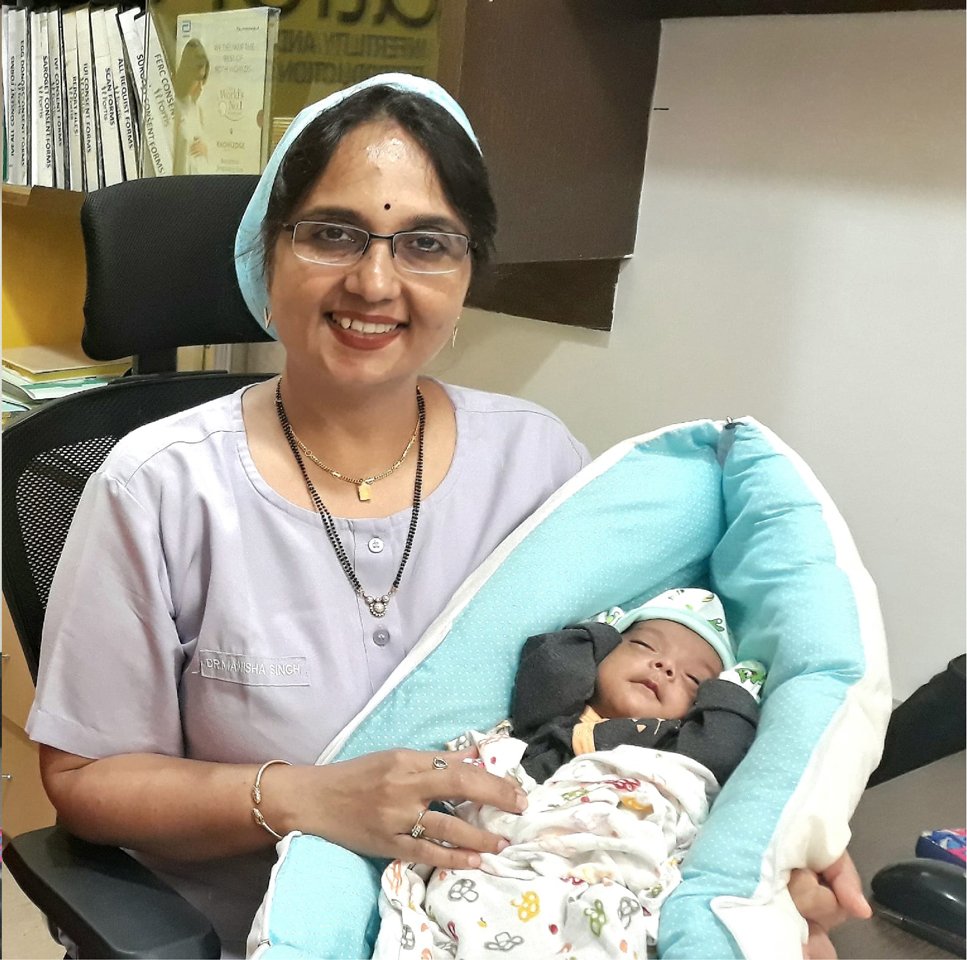
Dr. Manisha Rajpal Singh
Dr. Manisha Singh is an eminent Gynaecologist and a sub-specialist in Reproductive Medicine & Surgery with over 32 years of extensive surgical experience. She is also an acknowledged expert in Reproductive Medicine and Surgery services by Royal College of Obstetricians and Gynaecologists (RCOG), London, UK. Dr. Manisha Singh has an experience of over 32 years in Obstetrics, Gynaecology, Infertility & Assisted Conception treatments.
How is Intracytoplasmic Sperm Injection (ICSI) Performed?
ICSI is performed during an IVF treatment cycle and involves several precisely planned steps.
Initial Fertility Evaluation
The treatment starts with an assessment of both partners’ fertility. The medical history, hormone testing, ultrasound examination, assessment of ovarian reserve and semen analysis will help to establish that the chosen treatment is ICSI.
Ovarian Stimulation
The patient is prescribed medications to stimulate the ovaries and produce several mature eggs. Ultrasound examinations and hormone testing help doctors know the proper time to collect the eggs.
Egg Retrieval
The procedure of egg collection is conducted using a minimally invasive transvaginal ultrasound-guided method while the woman is under sedation.
Sperm Collection and Preparation
A semen sample or surgically retrieved sperm is processed in the laboratory. Specific advanced methods are employed to choose the best sperm for fertilisation.
Single Sperm Injection into the Egg
With the help of advanced microscopic equipment, each mature egg is injected with a carefully selected sperm. The sperm injection procedure is designed to induce fertilisation of the eggs in suitable cases.
Embryo Culture and Development
After fertilisation, embryos are grown in a special laboratory environment. They are closely monitored to select healthy embryos to transfer.
Embryo Transfer
The embryo is then transferred to the womb through a catheter. The procedure is quite simple and can be done without anaesthesia.
Treatment Outcomes and Factors Affecting Success
● Age
Women’s age is one of the key factors influencing fertility treatment. The quality of the egg decreases with age, affecting fertilisation, embryonic development, and implantation.
● Egg Quality
Egg quality influences fertilisation and contributes to embryo development.
● Sperm Quality
Even though ICSI can address many sperm issues, the health of sperm cells, as well as their genetic material, is essential for normal fertilisation and embryonic development.
● Embryo Quality
Embryos that grow and develop well in the laboratory setting have higher chances of successful implantation.
● Underlying Cause of Infertility
Based on whether infertility is caused by male factor infertility, female reproductive organs or unknown causes, the underlying cause of infertility is very important in terms of treatment.
● Uterine Health
The health condition of the uterine cavity and proper preparation of the endometrium create the best environment for embryo implantation.
● Overall Reproductive Health
Having good general health, a proper diet, fitness and managing existing medical conditions may be useful in the context of fertility treatment.
Why Choose Dr Manisha Rajpal Singh for Intracytoplasmic Sperm Injection (ICSI)?
Parenthood is a personal journey, and finding the right fertility doctor can make all the difference. According to Dr Manisha Rajpal Singh, it is essential to listen to couples’ concerns, answer all their questions, and develop a treatment strategy tailored to their current fertility condition.
● Expertise in Reproductive Medicine
Dr Manisha brings many years of experience in reproductive medicine and has helped couples with a wide range of fertility concerns.
● Internationally Recognised Fertility Specialist
Committed to offering her patients fertility solutions in line with internationally set standards for reproductive medicine.
● Personalised IVF and ICSI Treatment Plans
Every patient couple is provided with an individual treatment plan based on their diagnosis and health condition.
● Advanced Embryology Laboratory Support
Modern embryology laboratories, staffed by qualified embryologists, ensure the careful handling of eggs, sperm, and embryos throughout the treatment process.
● Evidence-Based Fertility Care
Fertility treatment recommendations are based on scientific evidence and established guidelines in reproductive medicine.
● Patient-Centred Fertility Management
Communication, compassion, and personalised counselling are provided at each stage of the patients’ fertility journey.
Book an Appointment
If you are considering Intracytoplasmic Sperm Injection (ICSI) or would like to explore the most suitable fertility treatment options, schedule a consultation with Dr Manisha Rajpal Singh. An extensive fertility assessment can help decide on the most appropriate course of treatment to tackle your fertility problems.
FAQ’s
ICSI is a fertility procedure in which a single most suitable sperm is injected directly into a mature egg to facilitate fertilisation.
Conventionally, in IVF, the retrieved egg and sperm are placed in a Petri dish under controlled laboratory conditions to facilitate fertilisation. But in ICSI IVF treatment, the most suitable sperm is selected and thereby injected directly into the retrieved egg.
ICSI therapy is usually prescribed to those couples suffering from male factor infertility, failed fertilisation in earlier IVF attempts, surgical sperm retrieval, and other fertility problems.
No. Although commonly used for male factor infertility, ICSI may also be recommended for selected female infertility conditions or previous unsuccessful fertilisation during IVF.
The best sperm for ICSI will be selected by expert embryologists in the laboratory, based on appearance, motility, and other relevant factors.
Embryos are placed in a laboratory environment where embryo development is monitored before embryo transfer.
No. The embryo transfer takes place a few days later, depending on embryo development and the specific patient’s treatment program.
A typical ICSI IVF treatment cycle normally takes 2-3 weeks.
 If you Have Any Questions Schedule an Appointment OR Call Us On 080 - 66214281