What are Ovulation Induction and Follicle Monitoring?
Ovulation induction is a medical technique that employs specific drugs to stimulate the ovaries in order to produce one or several mature eggs. It is prescribed for women having problems with irregular ovulation and egg release. Follicle monitoring is the procedure of monitoring follicular development by means of transvaginal ultrasonography. As follicles contain the developing eggs, their development is essential in predicting the time of ovulation. Combining ovulation induction and follicle monitoring gives an opportunity to analyse the body’s reaction to treatment and find the time of possible conception. Thus, this combination is effective in fertility treatment for ovulation disorders.Who May Benefit from Ovulation Induction and Follicle Monitoring?
Irregular Ovulation
With irregular ovulation, women will not be releasing eggs regularly every month; hence, pregnancy is unpredictable. With ovulation induction, ovulation can be regulated, and follicle monitoring ensures that follicles develop properly.Anovulation
Anovulation simply means lack of ovulation within the menstrual cycle. With proper ovulation induction and follicle monitoring, the chances of releasing a viable egg are greatly increased.Polycystic Ovary Syndrome (PCOS)
One of the leading causes of ovulatory infertility is Polycystic Ovary Syndrome. Women with polycystic ovary syndrome usually need to go through ovulation induction and follicle monitoring.Unexplained Infertility
Some couples are unable to conceive despite normal investigation results. Controlled ovulation induction can increase the likelihood of pregnancy and help plan the conception timing.Ovulation Disorders
Women with problems with hormones or other medical conditions that prevent them from ovulating must receive special fertility treatment for ovulation disorders to ensure that the eggs mature properly and that there is ovulation.Fertility Treatment Cycles Involving IUI
Timing plays an essential role in the process of IUI, and, therefore, in this case, ovulation monitoring for pregnancy is useful.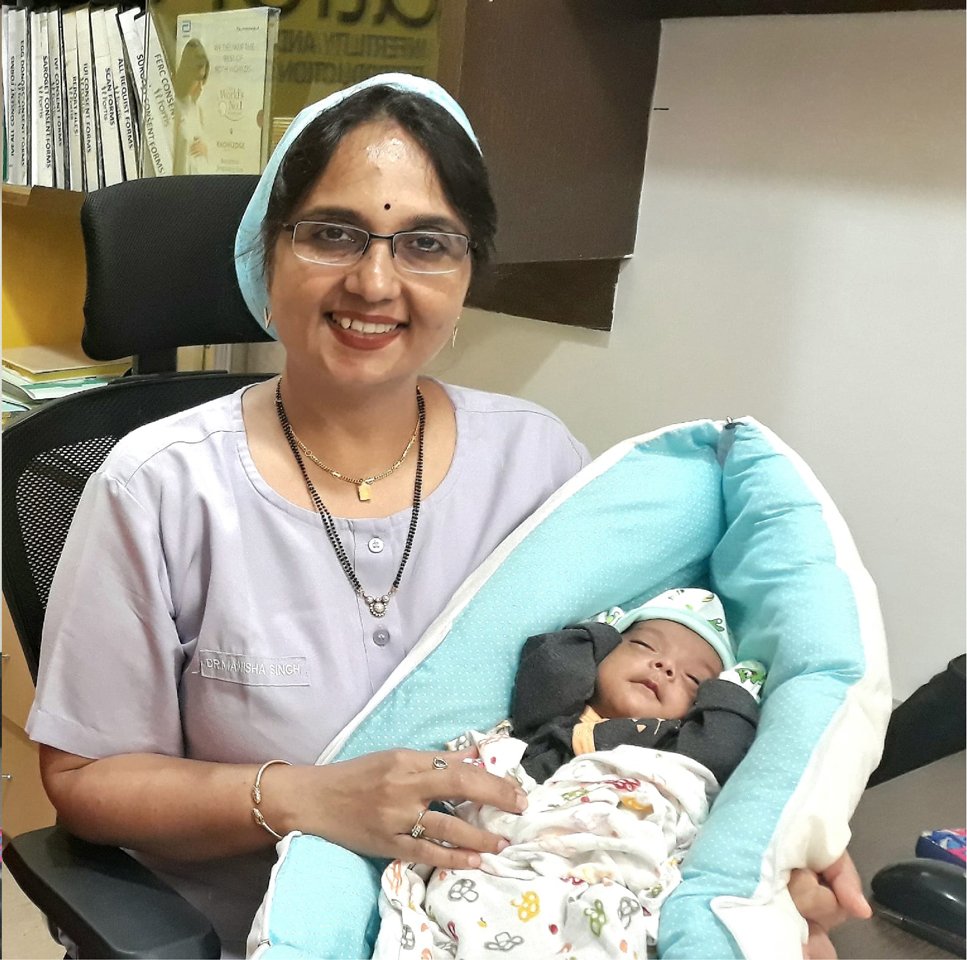
Dr. Manisha Rajpal Singh
Dr. Manisha Singh is an eminent Gynaecologist and a sub-specialist in Reproductive Medicine & Surgery with over 32 years of extensive surgical experience. She is also an acknowledged expert in Reproductive Medicine and Surgery services by Royal College of Obstetricians and Gynaecologists (RCOG), London, UK. Dr. Manisha Singh has an experience of over 32 years in Obstetrics, Gynaecology, Infertility & Assisted Conception treatments.
How is Ovulation Induction and Follicle Monitoring Performed?
● Initial Fertility Evaluation
Prior to treatment, a detailed fertility evaluation will be undertaken, including assessment of the patient’s history, assessment of the menstrual cycle, hormonal tests, and an ultrasound scan.
● Ovulation Induction Medications
Medications to develop the ovarian follicle (based on fertility evaluation results) are prescribed. Medication choice and dosage are individually selected based on age, ovarian reserve, response to previous medication, and the cause of infertility.
● Ultrasound Monitoring of Follicular Growth
Regular ultrasound monitoring is conducted throughout the menstrual cycle in order to measure the size and number of ovarian follicles present within the ovaries. Ultrasound monitoring helps in making adjustments in the course of fertility treatment and its effectiveness.
● Assessment of Endometrial Thickness
Along with the examination of follicles, the lining of the uterus, endometrium, is also assessed by ultrasound. An ideal endometrium helps create an optimal environment for embryo implantation.
● Identifying Ovulation Timing and the Fertile Window
With follicle maturation, the fertility specialist can identify the optimal fertile window for the couple. Based on the fertility treatment technique that has been chosen by the couple, the patients are advised about intercourse or other fertility techniques.
Treatment Outcomes and Factors Affecting Success
A few factors could affect the success rate of ovulation induction and follicle monitoring.
● Age
Chances of fertility tend to go down as you get older, especially in women over their thirties. Age can affect egg quality and ovarian response.
● Cause of Infertility
It is important to know the cause of infertility, as treatment results can vary depending on the underlying condition.
● Ovarian Reserve
The remaining eggs affect ovarian responsiveness to stimulation. Testing for ovarian reserve helps to select appropriate medications.
● Response to Ovulation Induction Medications
Each woman responds differently to ovulation induction medications. Frequent follicle monitoring will help make necessary dosage changes to support proper follicular development without additional risks.
● Overall Reproductive Health
Proper uterine structure, correct hormonal balance, and the absence of reproductive health issues will have a positive effect on treatment results.
● Male Partner Fertility Factors
Sperm quality is also very important for conception. Semen analysis should, therefore, be an integral part of the comprehensive fertility treatment.
Why Choose Dr Manisha Rajpal Singh for Ovulation Induction and Follicle Monitoring?
● Expertise in Reproductive Medicine
Dr Manisha Rajpal Singh is an expert in infertility & ovulation. With many years of experience in this field, she treats her patients with the most up-to-date treatment methods to help them cope with their issues.
● Internationally Recognised Fertility Specialist
She is known for her highly acclaimed clinical practice and client-centred approach and performs fertility procedures according to the latest international standards.
● Personalised Fertility Treatments
Treatment plans are based on personalised fertility treatment, the client’s medical history and ovarian response.
● Advanced Ultrasound Monitoring
The fertility clinic uses the latest ultrasound equipment for follicle evaluation during treatment, including follicle monitoring and timing of ovulation.
● Patient-Centred Fertility Care
Every patient is provided with empathic guidance and support as well as complete information at every stage of fertility treatment.
Book an Appointment
In case you are suffering from irregular menstrual cycles or problems with ovulation, or if you are trying unsuccessfully to get pregnant, you can contact Dr Manisha Rajpal Singh, who will provide you with thorough infertility testing to determine the cause of the problem and whether ovulation induction and follicular monitoring are appropriate for you.
Timely consultation and proper treatment will assist you in achieving optimal reproductive health.
FAQ’s
The ovulation induction procedure is a fertility procedure which uses drugs to stimulate the ovaries into producing and releasing the egg. The process is mostly advised to women who have problems with ovulating.
Follicle monitoring involves a series of transvaginal ultrasounds to measure follicle growth and to determine the best time for ovulation.
The treatment may prove helpful for women suffering from irregular ovulation, anovulation, PCOS, ovulation disorders, infertility due to unknown reasons, and those undergoing IUI.
Follicle monitoring can be done via a transvaginal ultrasound carried out at different stages of the menstrual cycle.
Normally, the follicle should be of a size of 18-22 mm, meaning that it has matured sufficiently to release an egg. However, the size may differ, depending on the individual’s treatment protocol.
 If you Have Any Questions Schedule an Appointment OR Call Us On 080 - 66214281