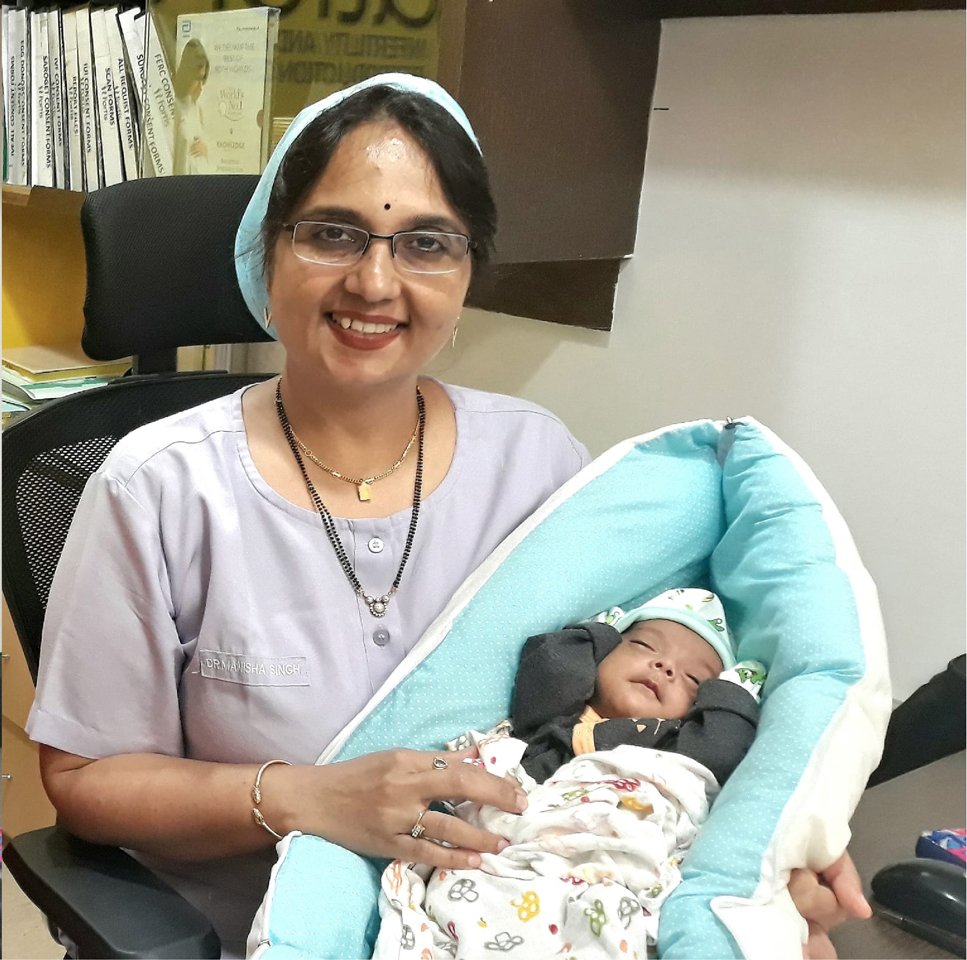
Dr. Manisha Rajpal Singh
Dr. Manisha Singh is an eminent Gynaecologist and a sub-specialist in Reproductive Medicine & Surgery with over 32 years of extensive surgical experience. She is also an acknowledged expert in Reproductive Medicine and Surgery services by Royal College of Obstetricians and Gynaecologists (RCOG), London, UK. Dr. Manisha Singh has an experience of over 32 years in Obstetrics, Gynaecology, Infertility & Assisted Conception treatments.
What is Donor Egg IVF Treatment?
In donor egg IVF treatment, doctors remove eggs from the donor and fertilise them with sperm to create embryos. Doctors then transfer these embryos into the woman’s uterus. The recipient carries the baby, but the child’s nuclear genetic material comes from the egg donor and the sperm provider.
Who May Benefit from Donor Egg IVF Treatment?
Women with Diminished Ovarian Reserve or Low AMH
When the ovaries have fewer eggs available, fertility medicines may not produce the expected number of eggs during IVF. When there is a low probability of conceiving through the use of their own eggs, women can consider donor egg IVF.
Women with Premature Ovarian Insufficiency
Premature ovarian insufficiency occurs when the ovaries lose normal function before age 40. For women affected by this condition, donor eggs may provide another way to pursue pregnancy.
Women with Poor Egg Quality
Egg quality naturally deteriorates with age. This can affect fertilisation and normal embryo development. In some cases, use of donated eggs can increase the chances of conception.
Women with Previous Unsuccessful IVF Cycles
When you have had several failed attempts with IVF, it may be helpful to look into the reasons for failure. If egg quality or embryo development appears to be a significant factor, the fertility specialist may discuss whether donor egg treatment is an appropriate next step.
Women with Certain Genetic Conditions
Donor eggs may help reduce the risk of transmitting certain maternal genetic conditions. Genetic counselling is recommended when appropriate.
How Does the Donor Egg IVF Process Work?
Initial Fertility Consultation and Evaluation
The egg donation IVF procedure commences with a comprehensive review of your medical history, fertility treatment history, and a physical examination to assess your reproductive health. Your fertility doctor might suggest you undergo some blood tests and a scan to help assess your reproductive health and determine what is best for you.
Egg Donor Screening and Selection
Screening and selecting an egg donor require evaluating her medical and family history and testing her for infectious diseases. Further testing may be required depending on the situation and rules governing this procedure.
Recipient Preparations
Hormonal medication can be provided to prepare the uterine lining. Ultrasonography helps determine whether embryo transfer is appropriate.
Donor Egg Retrieval and Fertilisation
The donor undergoes ovarian stimulation and egg retrieval, and eggs are fertilised using IVF/ICSI if necessary.
Embryo Development and Embryo Transfer
This takes place in the laboratory, where embryos develop and are monitored. A suitable embryo is transferred into the recipient’s uterus. Additional suitable embryos may be frozen when appropriate.
Pregnancy Testing and Follow-Up
A beta-hCG test will confirm pregnancy. With a positive result, subsequent consultations and ultrasound scans monitor pregnancy development.
Who Is Eligible for Donor Egg IVF Treatment?
Eligibility depends on donor egg recipient evaluation of ovarian function, uterine health, medical history, and the ability to carry a pregnancy. Women who have ovarian insufficiency, poor ovarian response or some specific genetic problems may be considered eligible. However, treatment must comply with the Indian Act and the Regulations on Assisted Reproductive Technology 2021.
How Are Egg Donors Screened and Selected?
The screening process in the donor egg fertility programme involves several critical evaluations, including:
- Medical and Family History Assessment
- Screening for Infectious Diseases
- Genetic screening for various diseases may have to be done on a case-by-case basis.
- Selection, consent and treatment should follow guidelines.
What Are the Benefits of Donor Egg IVF Treatment?
- Helps increase chances of pregnancy if the egg is of poor quality.
- Provides a choice to women who have low ovarian reserve or premature ovarian insufficiency.
- Can be used after failed IVF attempts.
- Can be helpful for women suffering from certain genetic disorders.
- Allows personalised treatments according to the specific problem faced by the woman, such as the condition of the sperm and uterus.
What Are the Success Rates of Donor Egg IVF?
Donor egg IVF may have higher success rates than conventional IVF because the egg itself is not affected by age. However, success cannot be guaranteed in either case.
Factors Affecting Donor Egg IVF Success
Donor egg IVF success depends on several factors, including:
- Donor age
- Embryo development
- Sperm quality
- Uterine health
- Overall medical condition
It is always best to discuss this in detail with your doctor so you understand the possible outcomes.
What Are the Risks and Limitations of Donor Egg IVF?
Possible complications include failure to implant, miscarriages, and multiple pregnancies, especially if more than one embryo is implanted. Pregnancies resulting from donor eggs are at a higher risk of suffering from hypertensive complications. Appropriate antenatal monitoring is important. Counselling can help address emotional and genetic-parenthood concerns.
Donor Egg IVF vs IVF with Your Own Eggs
| Conventional IVF | Donor Egg IVF |
| Uses eggs collected from the patient. | Uses eggs obtained from a donor. |
| Can be used if the patient’s eggs are still viable. | This may be used when egg viability and ovarian reserve are low. |
| The fertility doctor will evaluate the patient’s egg quality and ovarian reserve. | The fertility doctor will evaluate the recipient’s condition. |
If you’re not sure which one to choose, ask your fertility doctor for advice.
Why Choose Dr Manisha Rajpal Singh for Donor Egg IVF Treatment in Bangalore?
Dr Manisha Rajpal Singh provides individualised fertility treatments to empower the patient to make a wise decision regarding their treatment. She can be consulted for:
- Individualised fertility evaluation
- Advanced scientific ways of treatment planning
- Suggestions according to your medical background and the results of previous IVF treatments
- Guidance on donor egg IVF treatment and other alternatives
- Individualised help during the process of treatment
Book an Appointment
Contact Dr Manisha Rajpal Singh for evaluation of your eligibility for Donor Egg IVF at Bannerghatta Road.
FAQ’s
Yes, particularly when low ovarian reserve makes it difficult to achieve success with their own eggs.
Yes, especially when poor egg quality of the eggs has caused those failures.
No, because the child will inherit genetic material from the donor egg and the sperm used, while the mother is only the carrier.
Treatment may take a few weeks, depending on donor availability and the formalities that need to be completed.
Donor egg IVF treatment may give the patient a better chance at having a baby, especially when the patient’s own eggs have a lower chance of conception for whatever reason.
 If you Have Any Questions Schedule an Appointment OR Call Us On 080 - 66214281