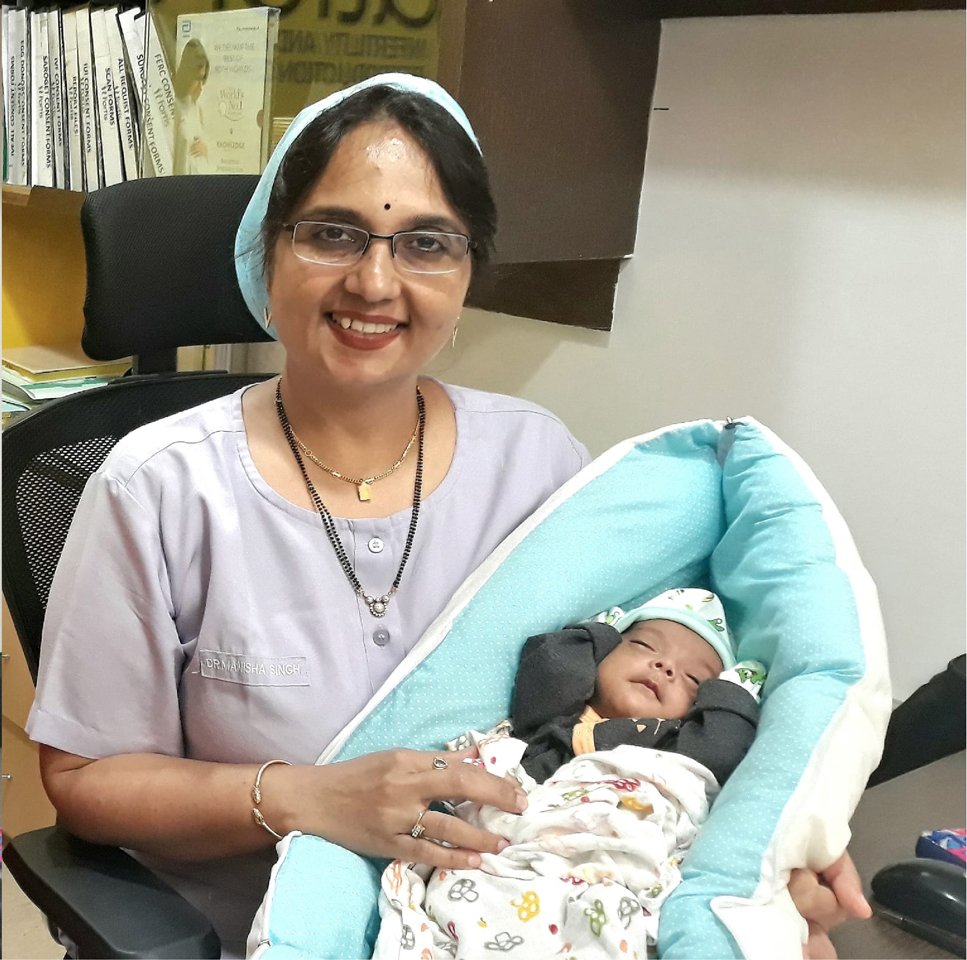
Dr. Manisha Rajpal Singh
Dr. Manisha Singh is an eminent Gynaecologist and a sub-specialist in Reproductive Medicine & Surgery with over 32 years of extensive surgical experience. She is also an acknowledged expert in Reproductive Medicine and Surgery services by Royal College of Obstetricians and Gynaecologists (RCOG), London, UK. Dr. Manisha Singh has an experience of over 32 years in Obstetrics, Gynaecology, Infertility & Assisted Conception treatments.
What Is Donor Sperm IVF Treatment?
In the donor sperm IVF treatment, eggs collected from the woman are fertilised in the laboratory with sperm from a screened donor, and the embryo is placed in her womb. This is IVF using donated sperm, run as a donor sperm fertility programme with donor matching and counselling included.
Who May Benefit from Donor Sperm IVF Treatment?
Couples Affected by Severe Male Factor Infertility
A very low sperm count or poor sperm movement can make fertilisation unlikely, even with advanced laboratory techniques.
Men Diagnosed with Azoospermia
Azoospermia means no sperm appears in the semen. Donor sperm is an option when surgery cannot retrieve any.
Couples with Certain Genetic Conditions Affecting Male Fertility
Y chromosome microdeletions are missing pieces of genetic material that lower or stop sperm production. A man can also carry a gene fault that could pass to his child.
Couples with Previous Unsuccessful Fertility Treatments
Repeated failed IUI or IVF cycles with the partner’s sperm sometimes trace back to sperm quality.
Eligible Single Women Considering Donor Sperm IVF
Single women who meet the medical and legal requirements can use donor sperm to conceive.
How Does the Donor Sperm IVF Process Work?
Initial Fertility Consultation and Evaluation
Bring all reports from earlier IUI or IVF cycles. The doctor reads them and asks about your general health. The doctor also orders a pelvic scan and hormone blood tests.
Donor Sperm Screening and Selection
The sperm comes from a registered bank. The doctor first matches blood groups and then adds physical traits such as height and complexion.
Ovarian Stimulation and Monitoring
The doctor gives hormone injections daily for ten to twelve days. Repeated scans show how the follicles respond, and a slow response means the doctor needs to increase the dose.
Egg Retrieval and Fertilisation
Retrieval takes about twenty minutes under light sedation. The doctor collects the eggs with a fine needle, and the embryologist fertilises them with donor sperm in the laboratory.
Embryo Culture and Development
The embryos spend three to five days in an incubator while the embryologist grades their growth each day. The healthiest one is chosen for transfer.
Embryo Transfer Procedure
Transfer needs no anaesthesia, and a thin catheter is used to carry the embryo into the uterus.
Pregnancy Testing and Follow-Up
About two weeks after transfer, a blood test detects the pregnancy hormone, and a scan around the sixth week confirms a heartbeat.
Who Is Eligible for Donor Sperm IVF Treatment?
Donor sperm eligibility criteria focus on the woman’s body. Her uterus has to carry a pregnancy, and her own eggs have to be healthy, because donor sperm cannot change egg quality. Couples meet a counsellor and sign a consent form together.
How Are Sperm Donors Screened and Selected?
Sperm donor screening and testing is done before any sample is used. Blood tests rule out HIV and hepatitis, and carrier tests look for gene faults that could reach a child. The clinic freezes the sample for six months and retests the donor before releasing it. Once a donor clears all of this, the donor sperm selection process matches blood group first and physical features such as height and complexion second.
What Are the Benefits of Donor Sperm IVF Treatment?
Donor sperm offers a chance of pregnancy when a partner’s sperm cannot be used. Donor sperm fertility treatment offers the following benefits.
- A pregnancy the woman carries herself
- Screened donor sperm of tested quality
- Lower chance of passing on a known inherited condition
- A supervised route for single women
What Are the Success Rates of Donor Sperm IVF?
Rates differ between clinics and patients, so quoting a single figure could be misleading. Using screened donor sperm addresses sperm quality concerns, while the outcome depends largely on the woman’s age and egg quality.
Factors Affecting Donor Sperm IVF Success
The odds differ from woman to woman, and these are the main reasons.
- Age, the strongest predictor
- Ovarian reserve
- Uterine health
- Embryo quality
- Smoking, which lowers the chance of pregnancy
What Are the Risks and Limitations of Donor Sperm IVF?
Donor sperm IVF carries the usual risks of IVF.
- Ovarian hyperstimulation syndrome from fertility injections
- Multiple pregnancy if more than one embryo is transferred
- No pregnancy in a given cycle
- Emotional adjustment to using donor sperm
Donor Sperm IVF vs Donor Sperm IUI: What Is the Difference?
IUI places washed sperm directly into the uterus around ovulation and works best when the fallopian tubes are open and the eggs are healthy. IVF fertilises eggs in the laboratory, making it suitable for women with blocked tubes and some women of advanced reproductive age. Doctors often start with IUI for younger women who have no other fertility problems.
Why Choose Dr Manisha Rajpal Singh for Donor Sperm IVF Treatment?
Dr. Manisha Rajpal Singh personally guides patients through donor use and consent. Families considering donor sperm IVF treatment in Bangalore often have personal questions, which she addresses before treatment begins. She remains involved in the case until the pregnancy test.
Book an Appointment
If you are considering IVF with donor sperm in Bangalore, book a consultation with Dr Manisha Rajpal Singh. Bring any previous test reports to your appointment.
Book a consultation today!
FAQ’s
Couples with severe male-factor infertility or azoospermia, as well as eligible single women, may consider donor sperm IVF.
Yes. When no sperm can be found, donor sperm may allow couples to pursue pregnancy through IVF.
Donors undergo infection testing and genetic carrier screening. Samples are released for use only after the required screening results are reviewed.
In some cases, yes. The chances of pregnancy depend on factors such as age, fertility history and whether the fallopian tubes are blocked. IVF may be recommended when IUI is less suitable.
A fresh cycle typically takes about four to six weeks, from the first injection to the pregnancy test.
 If you Have Any Questions Schedule an Appointment OR Call Us On 080 - 66214281