Table of Contents
- Introduction
- What is Semen Freezing?
- Who May Benefit from Semen Freezing?
- How is Semen Freezing Performed?
- Treatment Outcomes and Factors Affecting Success
- Why Choose Dr Manisha Rajpal Singh for Semen Freezing?
- Frequently Asked Questions (FAQs)
What is Semen Freezing?
Semen freezing involves collecting, analysing, preparing, and storing sperm at very low temperatures for future use. Also called sperm cryopreservation, this technique helps preserve sperm when a fresh semen sample may not be available later or when fertility treatment is planned for a future date. Frozen sperm may be used in assisted reproductive treatments such as intrauterine insemination (IUI) or in vitro fertilisation (IVF), depending on the fertility evaluation and treatment plan. Unlike a fresh semen sample, which is processed for immediate use, cryopreserved sperm is stored under controlled cryogenic conditions until it is required for treatment.Who May Benefit from Semen Freezing?
Semen freezing may be considered in several situations where preserving sperm for future fertility treatment or reproductive planning may be useful. The recommendation depends on the individual’s medical history, semen parameters, fertility goals, and planned treatment.Men Planning Fertility Preservation
Men who wish to preserve their reproductive options for future family planning may consider sperm freezing after appropriate fertility counselling and evaluation.Men Undergoing Medical Treatment That May Affect Fertility
Certain treatments, including chemotherapy, radiation therapy, and some major surgeries, may affect sperm production or reproductive function. Freezing sperm before treatment may help preserve future fertility options.Men with Conditions Affecting Sperm Production
Certain medical conditions may gradually affect sperm production or quality. In selected cases, early sperm cryopreservation may be considered before further decline occurs.Men with Low or Declining Sperm Counts
Men with low sperm counts or concerns about declining sperm production may be advised to freeze one or more semen samples, depending on the semen analysis findings and treatment plan.Men Requiring IVF or IUI Treatment
Frozen sperm may provide flexibility during IVF or IUI treatment, particularly when there is uncertainty about whether a fresh semen sample can be provided on the day of the procedure.Men Who May Not Be Available on the Day of Fertility Treatment
Men who may be unavailable on the planned treatment day because of travel, work commitments, or other circumstances may choose to freeze sperm in advance so that a stored sample is available when required.How is Semen Freezing Performed?
The semen freezing procedure generally involves fertility assessment, semen collection and analysis, preparation of the sample, cryopreservation, and secure storage. The exact process may vary depending on the individual’s semen parameters and fertility treatment plan.Initial Fertility Evaluation
The fertility specialist reviews the individual’s medical history, reproductive history, and any previous fertility investigations. Appropriate tests may be recommended based on the clinical findings.Semen Sample Collection
The semen sample is usually collected through masturbation into a sterile container in a private setting at the fertility clinic. Specific instructions regarding abstinence before collection may be provided by the fertility team.Semen Analysis
The collected sample is evaluated in the laboratory for parameters such as semen volume, sperm concentration, motility, and other relevant characteristics.Preparation of the Semen Sample
The semen sample is prepared in the laboratory before freezing. Cryoprotective solutions may be added to help protect sperm cells from damage during the freezing and thawing process.Sperm Cryopreservation
The prepared sample is divided into appropriate storage containers and cooled using specialised freezing protocols. It is then stored at very low temperatures to preserve the sperm for future use.Secure Frozen Sperm Storage
The frozen sperm samples are stored in specialised cryogenic storage systems, commonly using liquid nitrogen. Storage conditions are carefully maintained according to laboratory protocols.Thawing and Use in Fertility Treatment
When the stored sperm is required, the sample is thawed and assessed in the laboratory. Depending on the sperm quality, fertility evaluation, and treatment plan, it may then be used for procedures such as IUI or IVF.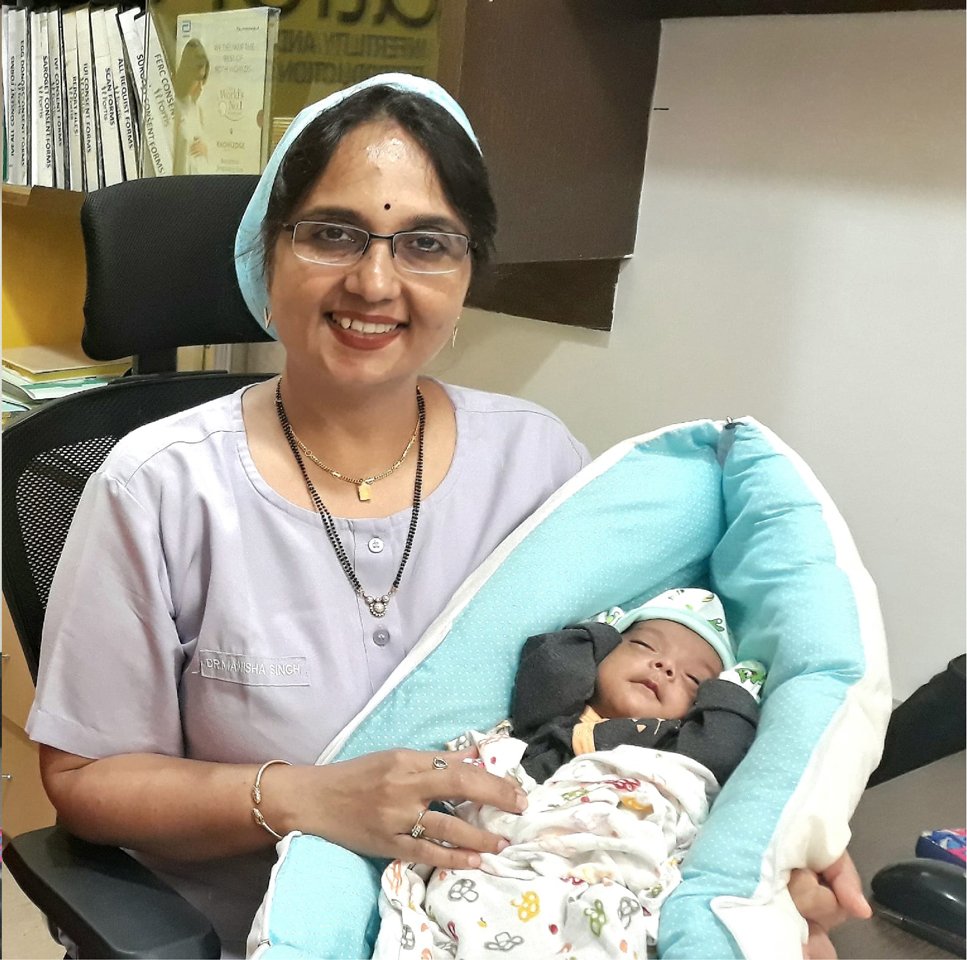
Dr. Manisha Rajpal Singh
Dr. Manisha Singh is an eminent Gynaecologist and a sub-specialist in Reproductive Medicine & Surgery with over 32 years of extensive surgical experience. She is also an acknowledged expert in Reproductive Medicine and Surgery services by Royal College of Obstetricians and Gynaecologists (RCOG), London, UK. Dr. Manisha Singh has an experience of over 32 years in Obstetrics, Gynaecology, Infertility & Assisted Conception treatments.
Treatment Outcomes and Factors Affecting Success
The outcome of treatment using frozen sperm can depend on several factors related to sperm quality, the freezing and thawing process, the chosen fertility treatment, and the fertility profile of both partners.
Sperm Count
The number of viable sperm available after thawing may influence which fertility treatment options are considered.
Sperm Motility
Sperm motility before freezing and after thawing can affect how the sample may be used in fertility treatment.
Sperm Morphology
Sperm morphology and overall sperm quality may influence the suitability of the thawed sample for different assisted reproductive treatments.
Sperm Quality Before Freezing
The overall quality of sperm before cryopreservation may affect how well sperm survive the freezing and thawing process.
Underlying Male Fertility Conditions
Underlying fertility-related conditions, including reduced sperm quality, hormonal abnormalities, or certain genetic conditions, may influence treatment planning and reproductive outcomes.
Sperm Response to Freezing and Thawing
Semen samples can respond differently to the freezing and thawing process. This may affect the number and quality of viable sperm available for fertility treatment after thawing.
Female Partner’s Fertility Factors
When frozen sperm is used as part of fertility treatment for a couple, outcomes may also be influenced by factors such as the female partner’s age, egg quality, uterine health, and endometrial receptivity.
Type of Assisted Reproductive Treatment
The choice between IUI, IVF, or ICSI depends on the quality and quantity of sperm available after thawing, along with the overall fertility evaluation of both partners.
Why Choose Dr Manisha Rajpal Singh for Semen Freezing?
Dr Manisha Rajpal Singh provides individualised fertility preservation planning based on the patient’s clinical evaluation, reproductive goals, and future treatment needs.
Her approach includes assessment of male and female fertility factors, counselling regarding available fertility preservation options, and planning for the appropriate use of sperm cryopreservation as part of a broader fertility treatment strategy.
Book an Appointment
Schedule a consultation with Dr Manisha Rajpal Singh to discuss whether semen freezing may be appropriate based on your fertility needs, reproductive goals, and treatment plan.
FAQ’s
Semen freezing is the process of preserving sperm at very low temperatures for future use in fertility treatment. It is also known as sperm cryopreservation.
Semen may be frozen before medical treatments or procedures that could affect fertility, when sperm production is expected to decline, or when future fertility treatment such as IVF or IUI is planned.
Sperm freezing may be considered by men who are planning medical treatment that could affect fertility, wish to preserve fertility for future family planning, have conditions that may affect sperm production, or may not be available to provide a fresh sample on the day of fertility treatment.
The semen sample is usually collected through masturbation into a sterile container in a private setting at the fertility clinic. The sample is then sent to the laboratory for analysis, preparation, and freezing.
The number of samples recommended depends on factors such as sperm quality, the reason for fertility preservation, and the planned fertility treatment. The fertility specialist can advise how many samples may be appropriate based on the individual’s clinical needs.
 If you Have Any Questions Schedule an Appointment OR Call Us On 080 - 66214281