Hysteroscopy is a technique which allows a doctor to look directly into the womb. A thin telescope called a hysteroscope is passed very gently through the cervix (the neck of the womb) into the womb itself. By attaching the hysteroscope to a TV camera and either looking at the screen or looking down the telescope, a full clear view of the inside of the womb is seen. At this stage, any disease can be seen and a biopsy (a sample of tissue) taken if necessary. This may well have been done already at an earlier stage during a previous visit to Gynaecological Out- patients. While viewing inside of the womb, small polyps or indeed lost intrauterine contraceptive devices can be retrieved.
What should you expect?The preparation: When you come to the department the doctor will explain the procedure to you and ask you to sign a consent form. At that stage, if there are any questions that you would like to ask about the procedures please do so. You need to inform either the doctor or the nurse present if you have any allergies or have had bad reactions to drugs or other tests in the past. They would also like to know about any previous surgery or operations you have had performed. You will be asked to take off all your clothes below the waist and wear a hospital gown. During the procedure you will be made to feel as comfortable as possible on an examination couch.
A nurse will be at your side throughout. She will ask you to rest your legs on two knee supports which are placed on either side near the end of the couch. Very gently, an instrument called a speculum, used when taking cervical smear, is placed within the vagina to enable the doctor to see the neck of the womb. A warm antiseptic solution is used to clean the surface of the cervix. The hysteroscope is gently placed close to the outer opening of the cervix and at this stage a slight cramping feeling may be felt within the lower part of the tummy, not unlike period pain. The hysteroscope is passed through the cervix into the womb and if desired you can watch the progress on the nearby television screen. Any findings seen can be explained at the time. The whole procedure is likely to take about 15-20 minutes.
After the examination you will be allowed to rest in a nearby waiting area.
Going Home
If you are going home after the procedure, it would be advisable that somebody comes to pick you up. It is important to rest quietly at home for the remainder of the day. However, you will not have received any drugs which will affect driving, operating machinery or drinking alcohol.
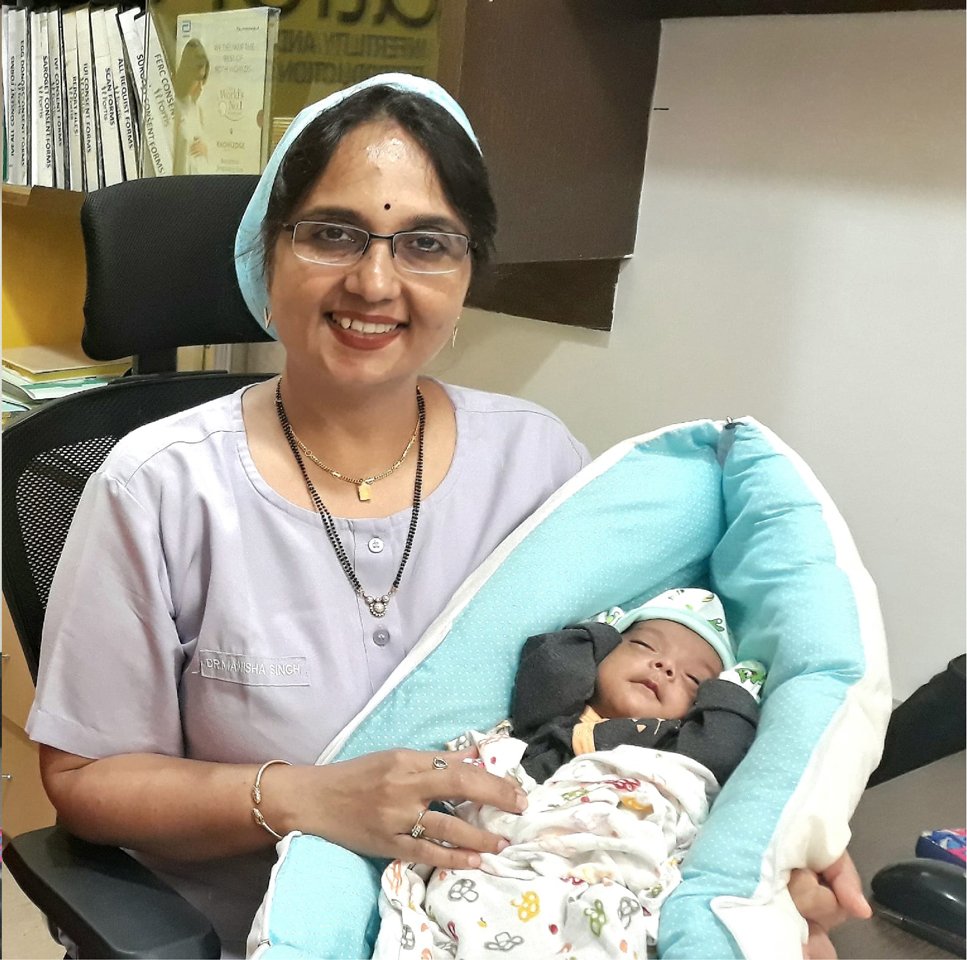
Dr. Manisha Rajpal Singh
Dr. Manisha Singh is an eminent Gynaecologist and a sub-specialist in Reproductive Medicine & Surgery with over 32 years of extensive surgical experience. She is also an acknowledged expert in Reproductive Medicine and Surgery services by Royal College of Obstetricians and Gynaecologists (RCOG), London, UK. Dr. Manisha Singh has an experience of over 32 years in Obstetrics, Gynaecology, Infertility & Assisted Conception treatments.
When do I know the result?
Immediately after the examination the doctor will explain his findings in full. If a biopsy or polyps have been removed at the time of the procedure, it will be several weeks before the results are available. Either written confirmation of the results or a further visit to the Out- patient Department will be arranged at the time of the examination.
 If you Have Any Questions Schedule an Appointment OR Call Us On 080 - 66214281