Endometriosis is a painful gynaecological disorder that affects millions of women across the world, significantly hampering their quality of life. This condition occurs in women mostly in the prime of their lives, and can affect their ability to get pregnant as well. Thus, this condition doesn’t just cause physical trauma but mental trauma as well.
Quick Endometriosis Facts- 25 million women suffer from endometriosis in India alone, with the number increasing every year.
- Endometriosis affects an estimated 1 in every 10 women during their reproductive years (mostly between 15-49 years), which is approximately 176 million women globally.
- Endometriosis can start as early as a girl’s first period and, in many instances, menopause may not resolve its symptoms.
- The World Endometriosis Research Foundation-funded study found that the disease accounted for a significant loss of productivity of 11 hours per woman per week.
Endometriosis is a condition in which the tissue lining the inside of the womb, called the ‘endometrium’, begins to grow outside the uterus. It is an estrogen-dependent disorder and just like in the menstrual cycle, the tissue that grows every month sheds off in the form of menstrual blood.
But since it does not have any way to leave the body, it blocks some of the areas outside the womb which in turn causes lumps or cysts around it.
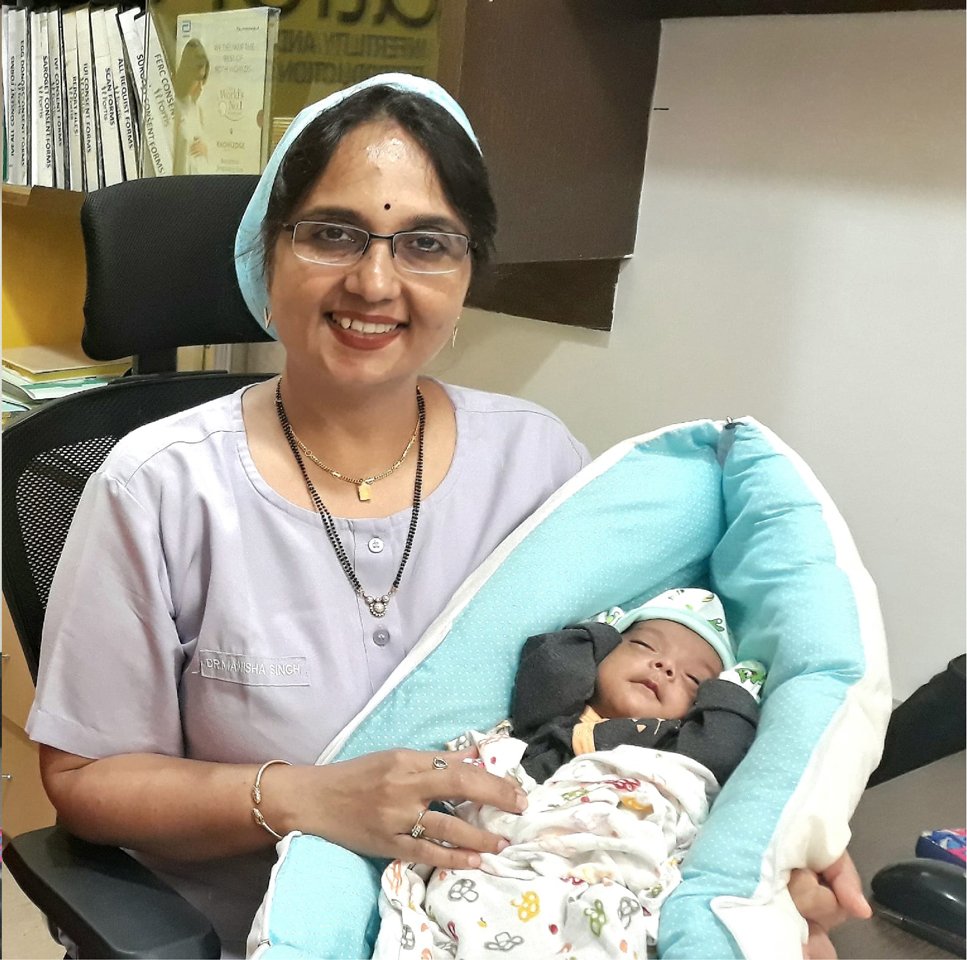
Dr. Manisha Rajpal Singh
Dr. Manisha Singh is an eminent Gynaecologist and a sub-specialist in Reproductive Medicine & Surgery with over 32 years of extensive surgical experience. She is also an acknowledged expert in Reproductive Medicine and Surgery services by Royal College of Obstetricians and Gynaecologists (RCOG), London, UK. Dr. Manisha Singh has an experience of over 32 years in Obstetrics, Gynaecology, Infertility & Assisted Conception treatments.
Wath
Endometriosis most commonly involves the ovaries, bowel or the tissue lining the pelvis. In rare cases, the disease could spread beyond the pelvic region and affect other parts of the body.
Common areas affected by Endometriosis
- Surface of the ovaries, the back of the uterus, the space between the uterus and the rectum, fallopian tubes and sometimes near the urinary bladder.
- When the disease affects the ovary, large patches of endometriosis may form into cysts that may be filled with dark blood, known as ‘Chocolate cysts’ or ‘Endometriomas’
- In some rare cases, it affects scar tissue in case of an earlier surgery.
Endometriosis Symptoms
Different women suffer from different types of symptoms when it comes to endometriosis. Very often, they suffer no symptoms, which is why it is also known as the silent disease. Some of the known symptoms of endometriosis are:
- Severe pelvic pain that is strong, sharp and paralyzing, running from the pelvis down to the thighs. This could increase during their periods.
- Pain during bowel movement and urination with blood in stools in some cases. This may also be accompanied by constipation or diarrhoea symptoms, akin to Irritable Bowel Syndrome.
Causes of Endometriosis
This disease has perplexed both scientists and medical professionals and there is no exact known cause. However, research has thrown up certain likely reasons for the development of endometriosis. These are:
- Backflow of menstrual blood or retrograde menstruation
- Genetic influence
- Surgical scar implantation
- Embryonic cell growth
- Fast-paced lifestyle
How Endometriosis affects Fertility
Research has shown that infertile women are 6 to 8 times more likely to have endometriosis than fertile women. Some of the explanations given for decreased fertility in women suffering from this disorder include distorted pelvic anatomy, endocrine and ovulatory abnormalities, altered peritoneal and tubal function, and altered hormonal and cell-mediated functions in the endometrium.
Based on common observations during laparoscopy, it has been found that the cysts and adhesions caused by the disease can lead to changes in the anatomy of the pelvic organs. This impairs the fertilisation process and in turn affects the release of eggs, thus leading to infertility. Many women with mild to moderate endometriosis are able to conceive and carry a pregnancy to term.
Doctors may advise women with endometriosis not to delay having children as the condition is likely to get worse over time. Interestingly, the symptoms of endometriosis, especially pain, seem to disappear in women who are pregnant or breastfeeding.
Diagnosis
Endometriosis is often misdiagnosed for bowel disorders or ovarian cyst, but the following methods are best for the diagnosis:
- Pelvic examination
- Scan
- Laparoscopy
Endometriosis Treatment
There is no permanent cure for endometriosis but if accurately diagnosed at the right time, the disease can be managed with various treatments, such as:
- Drugs
- Hormone therapy
- Laparoscopic surgery
- Hysterectomy
How Fortis helps women fight
Endometriosis
- We launched our state-of-the-art treatment centre for endometriosis management as a part of improving standards of healthcare for women.
- Assisted conception is offered to enable our patients to cope with and manage this condition effectively. Fortis Centre for Endometriosis Care brings together leading consultants in gynaecology along with experts from other specialties such as colorectal surgery, urology, pain management and psychologists.
- Our individualized planning takes into account the extent of the disease, the impact of the disease on the quality of life, and desire for pregnancy.
- We also plan to start the endometriosis patient support group whereby patients themselves can be champions in assisting their co-afflicted alongside the medical team.
 If you Have Any Questions Schedule an Appointment OR Call Us On 080 - 66214281