Hysterectomy is the name of the operation where the uterus is removed. The operation may also involve removing one or both ovaries and is performed under general anaesthetic.
An abdominal hysterectomy is an operation where your abdomen (tummy) is cut open, usually along the bikini line. A vaginal hysterectomy is when the uterus is removed through the vagina. The method used will depend on the reason why a hysterectomy is necessary and your gynaecologist will discuss this with you. Sometimes, one may be recommended Laparoscopic assisted vaginal hysterectomy (LAVH).
Why is a hysterectomy necessary?You should discuss the reasons for your hysterectomy with your gynaecologist, who will be happy to explain these to you.
What are the possible complications associated with hysterectomy?Most women will not experience any problems following a hysterectomy, but some may have an infection, a raised temperature or difficulty in passing urine for a few days after the operation. Very rarely there may be injury to the bowel or bladder and some women may experience bleeding during or after the procedure, which will occasionally require a transfusion.
How can I prepare myself for the operation?You can help yourself to a good recovery by giving up smoking 2-3 months before your operation, eating a healthy diet and taking regular exercise. Your nurse or general practitioner can advise you about these. If you are taking the oral contraceptive pill then you should stop this at least 4 – 6 weeks before your operation. You should use another form of contraception during this time. It is important to discuss all other medications with your gynaecologist before your operation.
What will having a hysterectomy involve? Before the operation:About a week before your admission to hospital you will usually be asked to attend a “pre-op clinic”. Blood samples will be taken and you will be seen by a nurse who will check your blood pressure, confirm your admission date and discuss any queries that you may have. A doctor will also discuss your operation with you at this time and check that you are fit for an anaesthetic by listening to your heart and lungs. You will be asked to sign a consent form to say that you understand about the hysterectomy and that you agree to it being carried out. The decision on whether not to remove your ovaries will be discussed, dependent on your hysterectomy and, most importantly, their condition when examined during surgery. Other investigations may sometimes be arranged for you, such as a chest x-ray. It is possible for you to visit the ward and meet some of the nurses who will be looking after you, if you wish.
Day of admission to hospital:You will be admitted the day before your operation when you will be introduced to the nurses and doctors on the ward.
The anaesthetist will visit you and ask some questions about your general health. He / she may also prescribe a “pre – med” lie. tablets or an injection which will help you relax and make you sleepy). If you have any queries or anxieties about the anaesthetic, the anaesthetist will be happy to discuss these with you. To avoid any problem during the anaesthetic, you will only be able to eat and drink until about 6 hours before Your nurse will escort you to the operating theatre where you will be introduced to a theatre nurse who will stay with you whilst you go to sleep. Your heart, blood pressure and oxygen levels will be monitored before and during your operation.
After the operation:You will wake up in the recovery room where the recovery nurse will continue to monitor your condition. You will be asked to breathe oxygen through a clear facemask. You will have a drip in your arm to give you fluids. You could be attached to an IV which when you press a button, will deliver a dose of a painkiller into your arm to ease any discomfort. The nurse will ask you to score any pain you have on a scale of 0-10(0 = no pain, 10 = severe pain). This will help you to judge if more painkillers are necessary. Your stay in recovery will last at least 30minutes, after which you will be taken back to the ward. A catheter may have been inserted into your bladder to drain the urine away and a small plastic tube may be draining fluid away from your operation site (wound).
You will be able to sit out of bed the day following your operation and will be encouraged to walk around the ward gradually over the next few days.
The physiotherapist will visit you to explain some breathing exercises to prevent a chest infection and show you some exercises to do when you go home. The “drip”, catheter and drain usually be removed within 2-3 days and you will be able to walk around more freely.
A small amount of vaginal bleeding is expected, but you should wear sanitary pads, not tampons.
Depending upon which type of hysterectomy you have had, you can expect to be in hospital between 4 and 10 days.
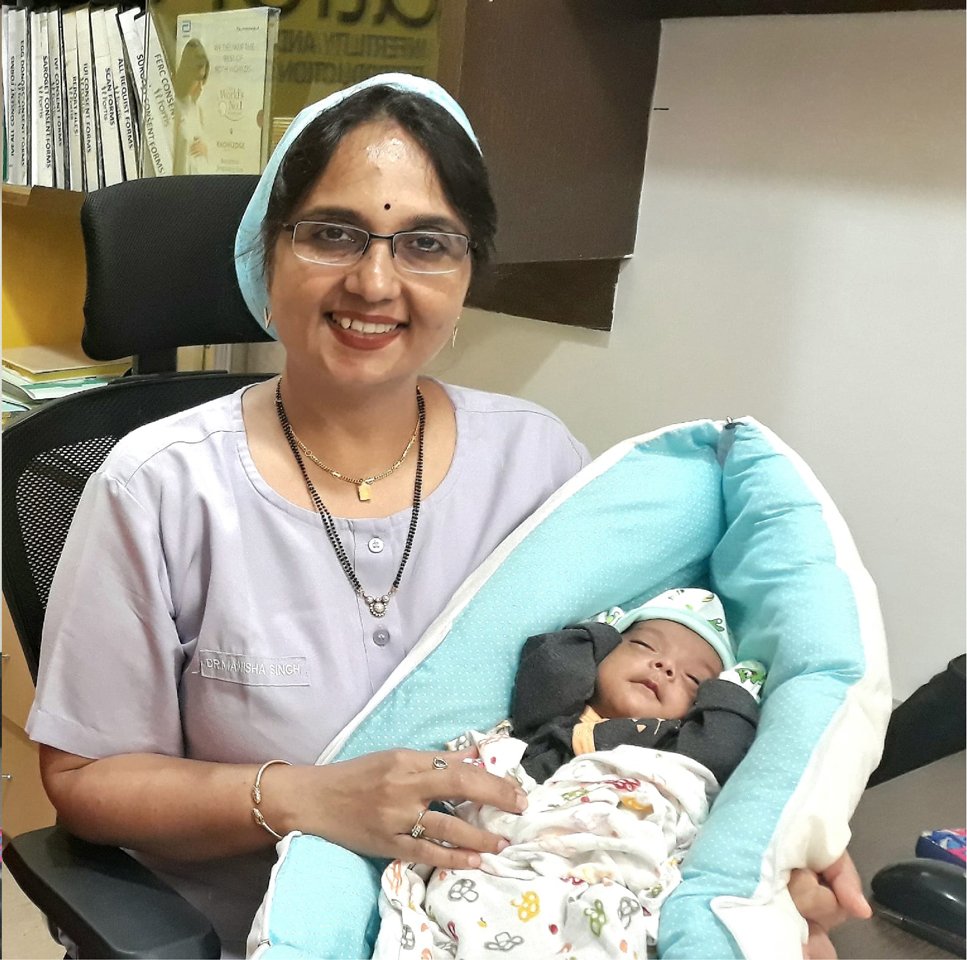
Dr. Manisha Rajpal Singh
Dr. Manisha Singh is an eminent Gynaecologist and a sub-specialist in Reproductive Medicine & Surgery with over 32 years of extensive surgical experience. She is also an acknowledged expert in Reproductive Medicine and Surgery services by Royal College of Obstetricians and Gynaecologists (RCOG), London, UK. Dr. Manisha Singh has an experience of over 32 years in Obstetrics, Gynaecology, Infertility & Assisted Conception treatments.
FAQ’s
You should arrange to be collected from hospital and not drive or use public transport to go home. The person who collects you should be able to carry your heavy bags. At first wear loose fitting clothing (eg. Something with an elasticated waist, as you may feel sore and uncomfortable in tighter clothing. A cushion or small pillow between you and the car seat belt might ease any discomfort during the journey home.
You may be surprised to find that you feel weak when you get home. It will take time to get back to normal and if you feel tired or sore put your feet up or have a rest on the bed – be guided by how you feel. It is important that you do the exercises that the physiotherapist has taught you. You are advised not to lift heavy objects or drive a car for at least six weeks. You should then make sure that you could perform an emergency stop without discomfort. You could try this before you turn on the engine. You should be fit enough to go back to work in 8 – 12 weeks and your doctor will be able to advise you at this time.
It is possible that you may experience tiredness for several weeks or even months; this varies from person to person.
Generally, the wound inside, which you cannot see, take about 4-6 weeks to heel and can be sore during this time. However, a hysterectomy need not affect your sex life, which you can resume when you and your partner feel comfortable and ready. You may experience vaginal dryness for a while and lubricating jellies may help and are available from chemists or large supermarkets.
You need not gain weight, but can as a result of inactivity combined with over- eating. Eating a sensible diet (less fat / more fibre) and taking gentle exercise will help.
This can be avoided by eating a diet that is rich in fibre and by drinking enough fluid (1 ½-2 litres / 1 ½-2 ½ pints each day).
A gradual increase in activity will also help relieve constipation.
Exercise (e.g. walking / swimming) should be gentle and gradual for about 6 weeks and then more energetic sport can be resumed again gradually. Be guided by how you feel. Try to take a walk every day and gradually increase the distance.
It is possible that you may experience tiredness for several weeks or even months; this varies from person to person. Remember, however far you walk you will have to walk back again!
Not if you have had a vaginal hysterectomy. If you have had an abdominal hysterectomy your scar will usually be along the bikini line, but this is often invisible after a few years. in a LAVH, you will have 3-4 scars (1 cm) on your tummy.
Yes – if you have had a subtotal abdominal hysterectomy when the cervix will not have been removed. If your hysterectomy has been carried out because of a tumour of the cervix you will need to have smears taken from the top of the vagina. Ask your doctor or nurse which applies to you.
If your ovaries have not been removed and you have not entered the menopause prior to your operation you are unlikely to need HRT. You will be able to discuss this with your doctor whilst you are in hospital and initiate the treatment if required.
Some women have said they felt low in mood after their surgery, but this usually has passed by 6-8 weeks. If you continue to feel low you should see your own doctor.
If ovaries are not removed, they will continue to produce eggs, but your body will absorb these.
You may need to attend the out-patients department for a follow-up appointment, depending upon your doctor’s wishes. This appointment may be given to you on the day you leave hospital or it may be posted to you after your discharge home.
 If you Have Any Questions Schedule an Appointment OR Call Us On 080 - 66214281